


Most attorneys start their firms backwards. They secure office space, order business cards, and build a website—then wonder why clients aren’t calling. After watching dozens of firms launch (and sometimes fold), I can tell you the difference between those that thrive and those that barely survive has nothing to do with having the nicest office or the most sophisticated logo.
The successful ones understand that starting a law firm isn’t about recreating the big firm experience in miniature. It’s about building something fundamentally different—a practice that generates reliable revenue from day one while maintaining the flexibility to evolve.
Why Most Attorneys Fail When Starting a Law Firm
The primary mistake is treating firm creation as an administrative exercise rather than a business launch. Attorneys focus on entity formation, malpractice insurance, and trust accounts—all necessary but not sufficient. They assume competence in law translates to business success.
The financial reality hits quickly. Without steady cash flow, that initial capital disappears into overhead. Many attorneys discover they’re excellent lawyers but unprepared business owners. The skills that made you successful at a firm—thorough research, careful analysis, risk aversion—can paradoxically hinder entrepreneurial success.
Another critical error is starting without a clear practice focus. “General practice” sounds flexible but usually means you’re competing with everyone while appealing to no one. Clients want specialists, even if that specialization is narrow. The attorney who handles “all criminal matters” loses to the one known for DUI defense.

What Should You Do Before You Start a Law Firm?
Financial Foundation
Before giving notice, calculate your actual runway. Not optimistic projections—realistic numbers based on zero revenue for six months. Include:
- Personal living expenses (don’t forget health insurance)
- Professional liability insurance
- Bar dues and CLE requirements
- Basic technology and software subscriptions
- Initial marketing investment
- Operating capital for trust account
Most attorneys need eighteen months of expenses saved, though many start with less. The stress of insufficient capital affects decision-making, often forcing you to take bad clients or unfavorable fee arrangements.
Client Pipeline Development
Start building relationships before you need them. The best time to develop referral sources is while you’re still employed. Attend bar events, contribute to practice area discussions, write articles for local publications. These activities become harder once you’re scrambling for clients.
Identify your first ten potential clients. Not categories of clients—actual people or businesses who might hire you. If you can’t name ten specific prospects, you’re not ready to launch.

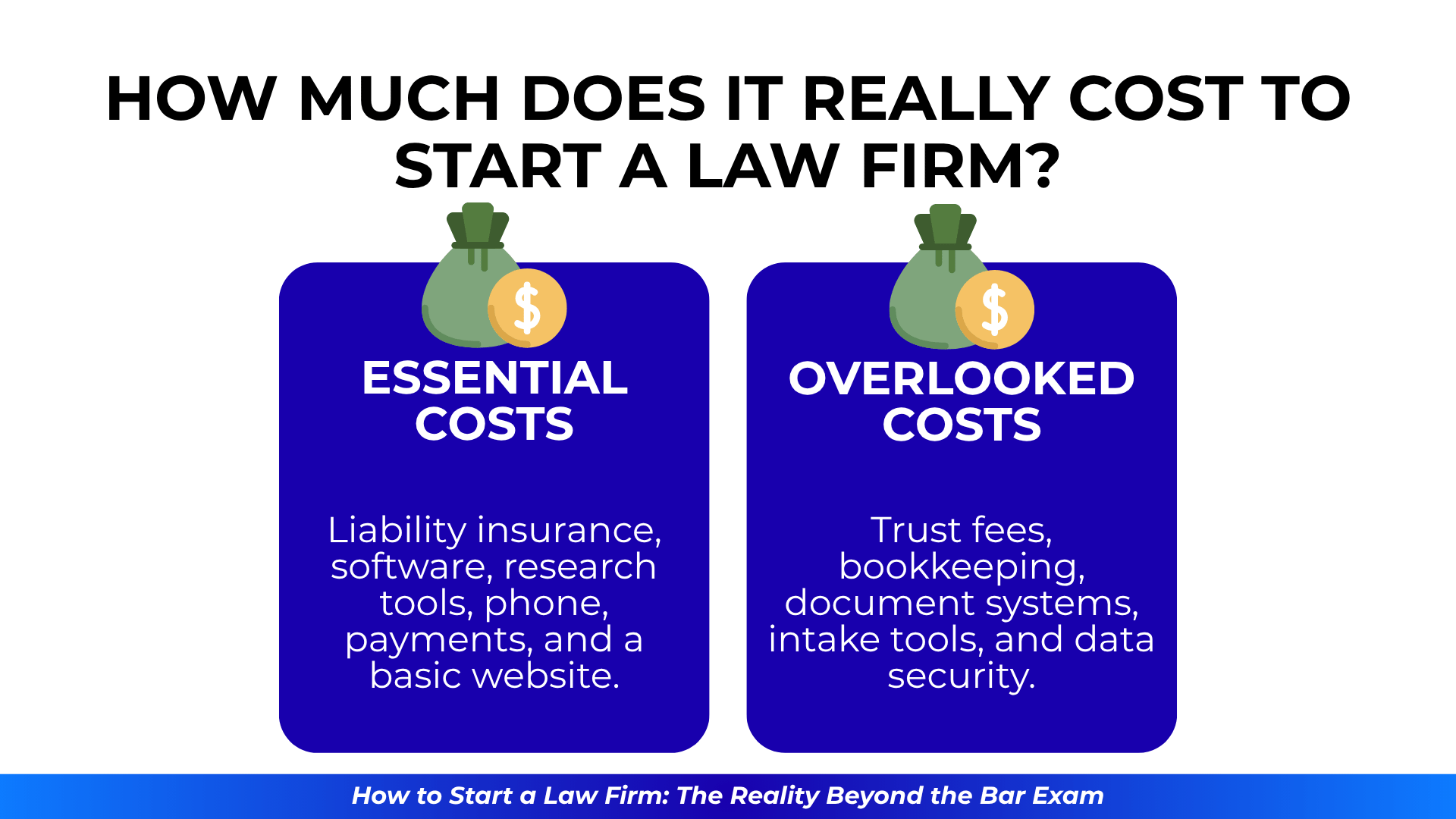
How Much Does It Really Cost to Start a Law Firm?
Forget the articles claiming you can start a firm with $500. While technically possible, that approach usually leads to corner-cutting that damages credibility. Realistic initial investment for a credible practice:
Essential Costs:
- Professional liability insurance: Varies by practice area and state
- Practice management software: Monthly subscription model
- Legal research platform: Another monthly expense
- Professional phone system: Virtual options available
- Compliant payment processing: Don’t use personal Venmo
- Basic marketing website: Functional, not fancy
Often Overlooked Costs:
- Trust account maintenance fees
- Bookkeeping software or service
- Document management system
- Client intake tools
- Backup and security systems
Virtual practice eliminates office rent but doesn’t eliminate all overhead. Many attorneys discover that working from home requires investment in technology and ergonomics to maintain productivity.
What Technology and Systems Do You Actually Need?
Practice Management Foundation
Choose practice management software before you open. Trying to migrate systems after you have active clients creates unnecessary complexity. Whether it’s Clio, MyCase, or PracticePanther, pick one and learn it thoroughly.
Automation matters more than features. Set up automated engagement letters, payment reminders, and basic client communications. These systems free you to focus on legal work rather than administrative tasks.
Document and Communication Systems
Avoid consumer-grade tools for client work. Using personal Gmail or storing files on personal Dropbox creates security risks and looks unprofessional. Invest in proper business accounts with appropriate security controls.
Create templates for everything—engagement letters, invoices, common motions, client communications. Starting without templates means recreating work repeatedly, wasting billable time.

How Do You Get Your First Clients?
Leverage Existing Networks
Your first clients come from people who already know you. Former colleagues, law school classmates, previous clients (where ethically permissible)—these connections provide initial momentum.
Don’t confuse networking with asking for handouts. Offer value first. Answer questions in online forums, provide insights at bar events, share knowledge freely. Reciprocity drives referrals more effectively than requests.
Build Specific Authority
Choose a narrow focus and become known for it. The attorney who handles “divorce cases for military families” gets more referrals than the “family law attorney.” Specificity doesn’t limit opportunity—it creates it.
Write about your focus area. Blog posts, bar journal articles, local newspaper op-eds—consistent publishing establishes expertise. AI tools can help with initial drafts, but authentic expertise must shine through.

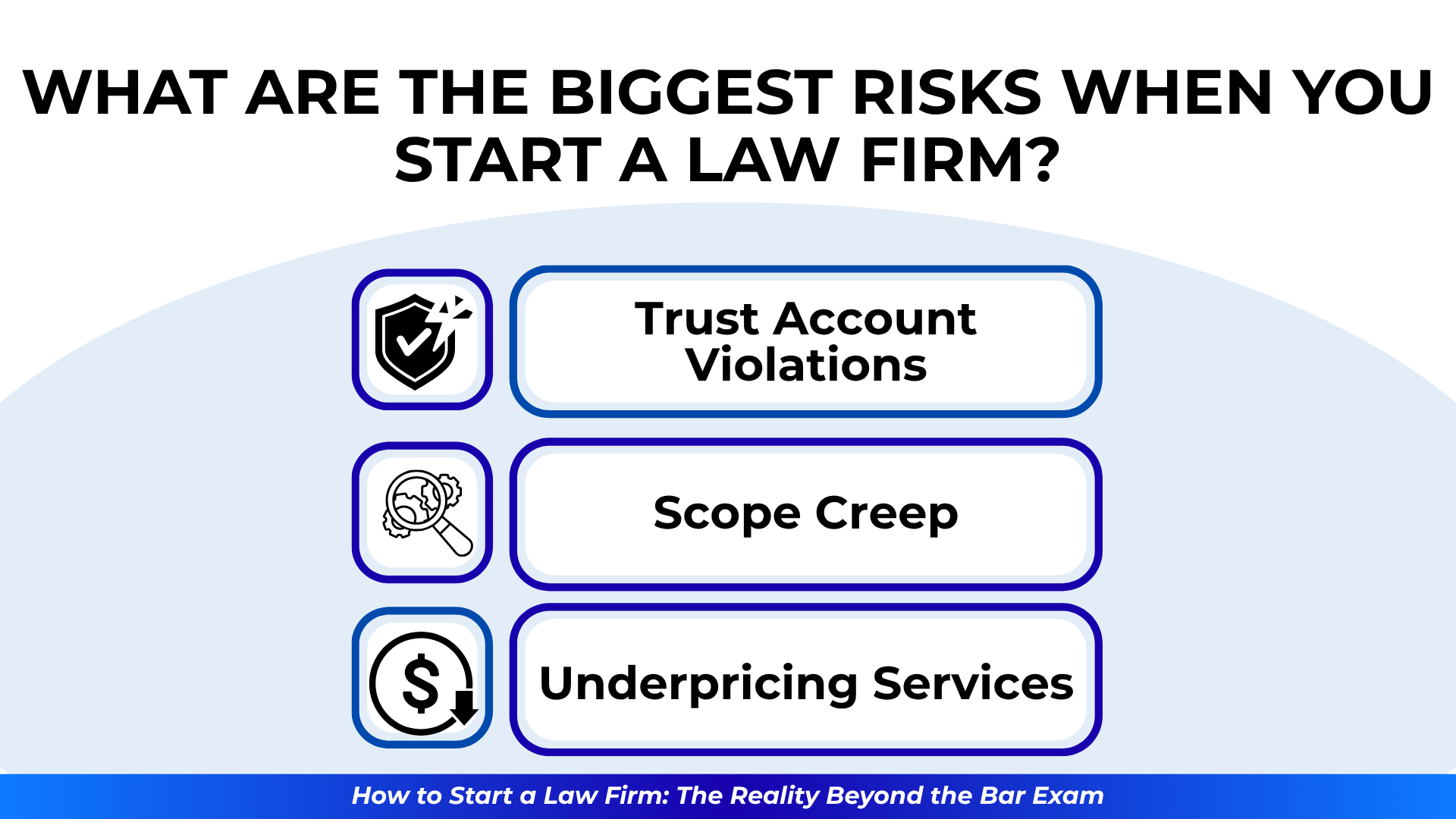
What Are the Biggest Risks When You Start a Law Firm?
Trust Account Violations
More solo practitioners face bar discipline for trust account violations than any other issue. Commingling funds, poor record-keeping, or borrowing from trust “temporarily” can end your career. Set up proper procedures from day one and never deviate.
Scope Creep
Desperate for revenue, new firms often accept matters outside their competence. This leads to malpractice claims, bar complaints, and reputation damage. Better to decline a case than bungle it.
Underpricing Services
Many attorneys undervalue their services when starting out, thinking low prices attract clients. This creates two problems: attracting price-sensitive clients who don’t value your work, and establishing precedents that are hard to change later.
Should You Start Virtual or Physical?
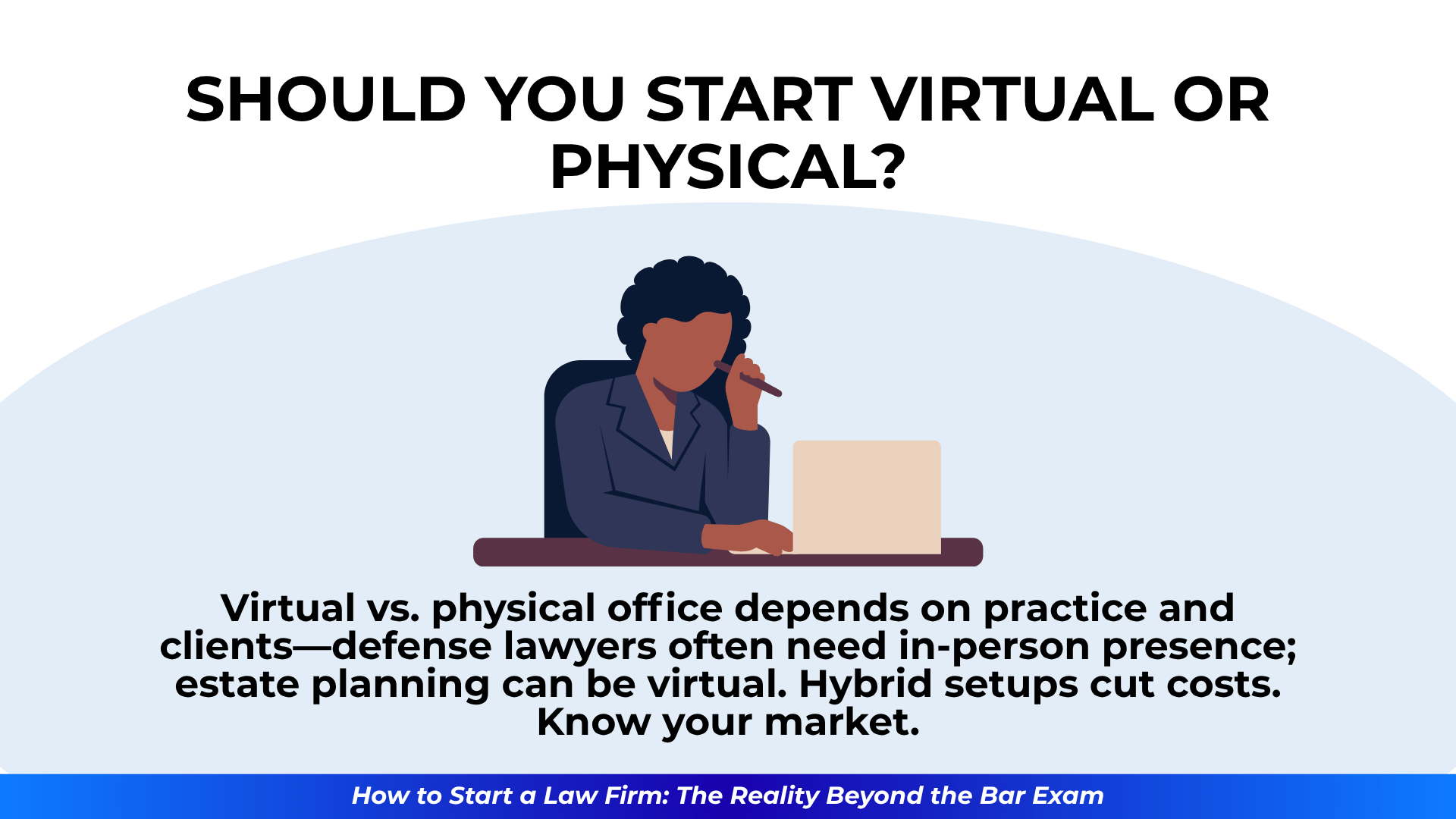
The virtual versus physical office decision depends on practice area and client expectations. Criminal defense attorneys often need physical presence near courthouses. Estate planning can run entirely virtual.
Consider hybrid approaches. Use co-working spaces for client meetings while maintaining a home office for daily work. This reduces overhead while maintaining professional presence when needed.
Client expectations vary by geography and generation. Urban clients often expect virtual options. Rural clients might view physical offices as stability indicators. Know your market.
Common Mistakes to Avoid in Your First Year
- Over-investing in appearance: Expensive offices and premium everything drain capital without generating clients
- Under-investing in marketing: Word-of-mouth alone rarely sustains a practice
- Taking every case: Bad clients cost more than no clients
- Ignoring finances: Not tracking metrics leads to nasty surprises
- Working without boundaries: Burnout kills firms faster than competition
- Skipping malpractice insurance: One claim without coverage ends everything

The Path Forward: Making Your Firm Sustainable
Learning how to start a law firm is just the beginning. Sustainability requires constant evolution. The practice that works in year one won’t scale to year five. Build systems that can grow, relationships that compound, and expertise that deepens.
Focus on recurring revenue through retainer arrangements or subscription models where appropriate. One-off transactions create feast-or-famine cycles that stress new firms. Predictable revenue enables better planning and growth.
Track everything—where clients come from, what services generate profit, which activities waste time. Data-driven decisions beat gut instincts when building a sustainable practice.
If you’re ready to move beyond theory and want specific guidance on launching your practice—from technology stack to marketing strategy—let’s discuss your situation. I’ve guided enough launches to know which decisions matter and which details are just noise.
